









Ask A Question
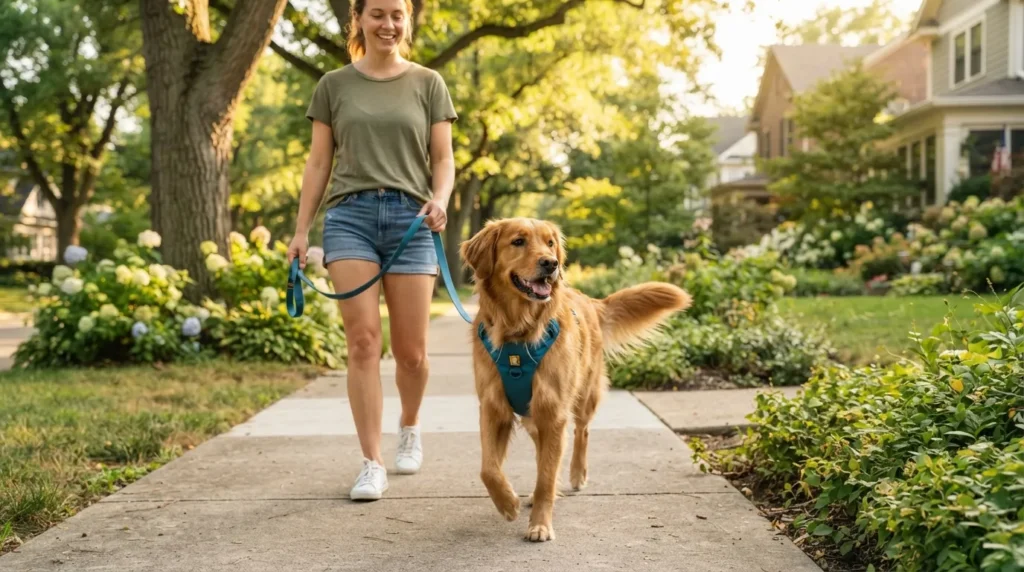
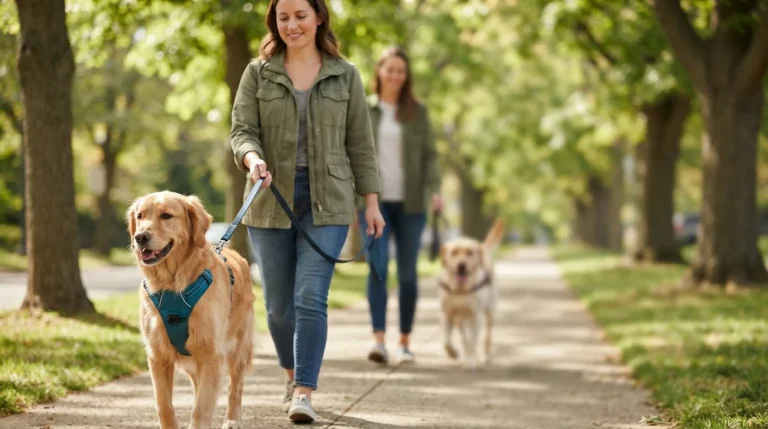
For most dogs, a harness is better than a collar for walks because it spreads leash pressure across the chest and shoulders instead of the neck, lowering the risk of tracheal and spinal strain. Keep a flat collar on for ID tags, but use a well fitted harness as your primary walking tool, especially for puppies, small breeds, pullers, and flat-faced dogs.
Why a harness usually wins for walks
A collar concentrates every tug on the neck. That pressure hits the trachea, cervical spine, and nearby soft tissue. Over time, repeated strain can contribute to inflammation or worsen conditions like tracheal collapse, which is most often seen in toy and small breeds such as Yorkshire Terriers, Pomeranians, and Toy Poodles.
A harness wraps the upper body and moves the load to the sternum and ribcage, where a dog is built to take force. That simple physics change makes walks gentler on the dog and steadier for you. It also reduces the “lean and lunge” leverage a determined puller can use against a collar.
Veterinary and training guidance widely recommends harnesses for dogs that pull, have breathing problems, or are still learning leash skills. The American Kennel Club recommends harnesses for small dogs prone to tracheal damage and for flat faced breeds with narrow airways.
When a collar still makes sense
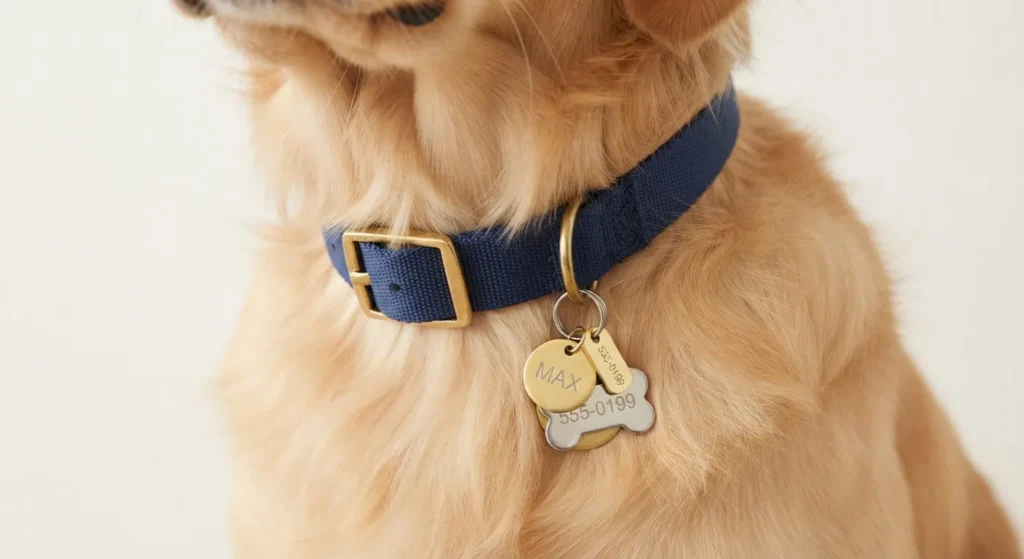
A flat collar is still the easiest way to carry identification. It holds your dog’s license, rabies tag, and ID tag. Many cities and counties require dogs to be licensed, and some require the license or rabies tag to be worn whenever your dog is off your property. A microchip is a smart backup, but it only helps if it is scanned and your contact details are up to date.
A collar can work for walks if your dog already walks on a loose leash without tugging. Even then, many trainers pair a collar for ID with a dedicated harness for the leash to keep pressure off the neck during surprises like squirrels, bikes, or other dogs.
Decision matrix: harness or collar for your dog?
Use this to pick the right tool for your situation.
| Dog profile | Best walking gear | Why |
|---|---|---|
| Puppy under 12 months | Lightweight Y shaped harness with a front or back clip | Protects a delicate trachea while leash skills form. Switch to a collar later only if your vet agrees and walking is solid. |
| Small or toy breed under 15 lb | Front clip or no pull harness | Reduces tracheal strain. Toy breeds are overrepresented in tracheal collapse cases. |
| Brachycephalic breeds such as Pugs, French Bulldogs, and Boston Terriers | Harness rather than a collar for the leash | The airway is already narrow, and neck pressure can trigger breathing problems. |
| Strong puller or reactive dog | Front clip harness or head halter, used with training | A front clip turns the dog sideways and removes forward leverage. Head halters give quick steering control but need a slow, positive introduction. |
| Calm, loose leash walker | Flat collar is acceptable, though a harness is still gentler | With no tension, collar risk is low, but a harness remains the safer default for unexpected lunges. |
| Neck or spine condition | Harness only | Keeps load off the cervical area. Follow your vet’s specific gear advice. |
Fit matters more than brand
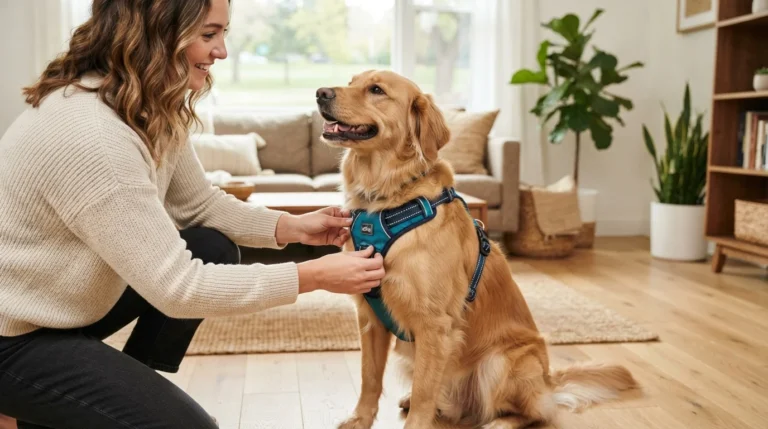
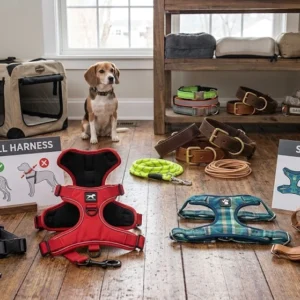
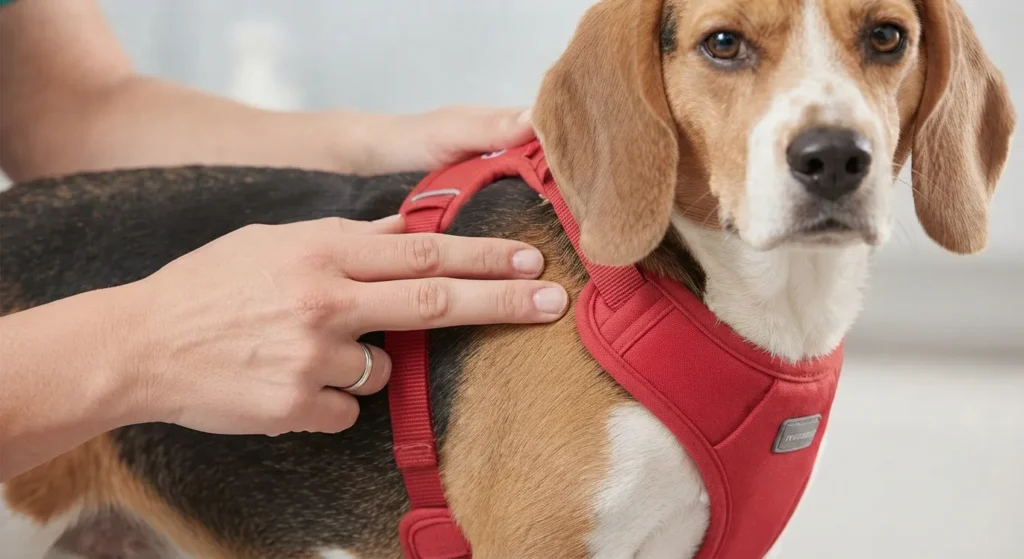
A poorly fitted harness can chafe or restrict movement. Aim for a Y-shaped design that avoids the throat and sits clear of the armpits. Measure around the widest part of the ribcage just behind the front legs, and around the base of the neck, then compare both numbers with the size chart rather than guessing by weight. Once it is on, use the two finger rule. You should be able to slide two fingers under each strap comfortably. If you can fit your whole hand, it is too loose. If you cannot fit two fingers, it is too tight.
Watch out for these common mistakes.
- Choosing a harness that sits too high on the neck.
- Skipping the girth measurement and guessing by weight alone.
- Leaving the harness on 24/7, which can cause rubbing and hot spots.
For everyday walks, put the harness on, clip the leash, and remove it when you are done. Keep the flat collar on for ID.
State and local rules you should know
Leash laws and ID requirements vary by state, county, and city. Some places require dogs to wear a license or rabies tag at all times when off your property. Many ordinances do not say whether the tag must hang from a collar, so a tag clipped to a harness may or may not satisfy the rule where you live. Check your city or county animal control website before relying on a harness only setup.
FAQ
Is a harness better than a collar for dogs?
For walks, yes in most cases. A harness spreads pressure across the chest and shoulders instead of the neck, which lowers the risk of tracheal and spinal strain. Keep a flat collar for ID tags, but use a harness as your main walking tool.
When should I use a harness instead of a collar?
Use a harness for puppies, small or toy breeds, brachycephalic dogs, pullers, reactive dogs, and any dog with neck or breathing issues. A collar alone is reasonable only for calm, loose leash walkers with no medical risk factors.
What type of harness is best for a puppy that pulls?
A lightweight, adjustable Y shaped harness with a front chest clip. The front attachment turns a pup sideways instead of letting them dig in and pull straight forward. Start with a harness from the first walk and keep the collar for ID only.
Can a collar cause tracheal collapse in dogs?
Collars do not “cause” tracheal collapse by themselves, but repeated neck pressure can worsen or trigger symptoms in predisposed dogs. That is why vets commonly advise switching to a harness for dogs diagnosed with, or prone to, tracheal collapse, especially toy and small breeds.
Should my dog wear a collar all the time?
A flat collar with ID tags should be worn during supervised waking hours and whenever your dog is outside your home. Remove collars during unsupervised crate time and overnight sleep to reduce snag risks.
Are front clip harnesses better than back clip?
For pullers and puppies learning leash skills, front clip designs are usually better because they redirect momentum and reduce forward leverage. Back clip harnesses are comfortable for calm walkers but can encourage pulling in dogs that lunge.
Do harnesses stop dogs from pulling?
Not by themselves. A good harness makes pulling less rewarding and gives you safer control while you train. Pair it with reward based loose leash training for lasting results. For more guidance on choosing the right gear, visit PetRascal.